Nigeria Makes Youth Olympic History with Double 100m Gold in Dakar
Gift Bright and Rosemary Nwankwo clinch men’s and women’s sprint titles, marking a historic milestone for Nigerian athletics and showcasing the country’s emerging sporting talent.
ABUJA, November 9, 2026
Nigeria has recorded a historic achievement at the Dakar 2026 Youth Olympic Games in Senegal after its young athletes, Gift Bright and Rosemary Chigozie Nwankwo, won gold medals in the men’s and women’s 100-metre events, respectively.
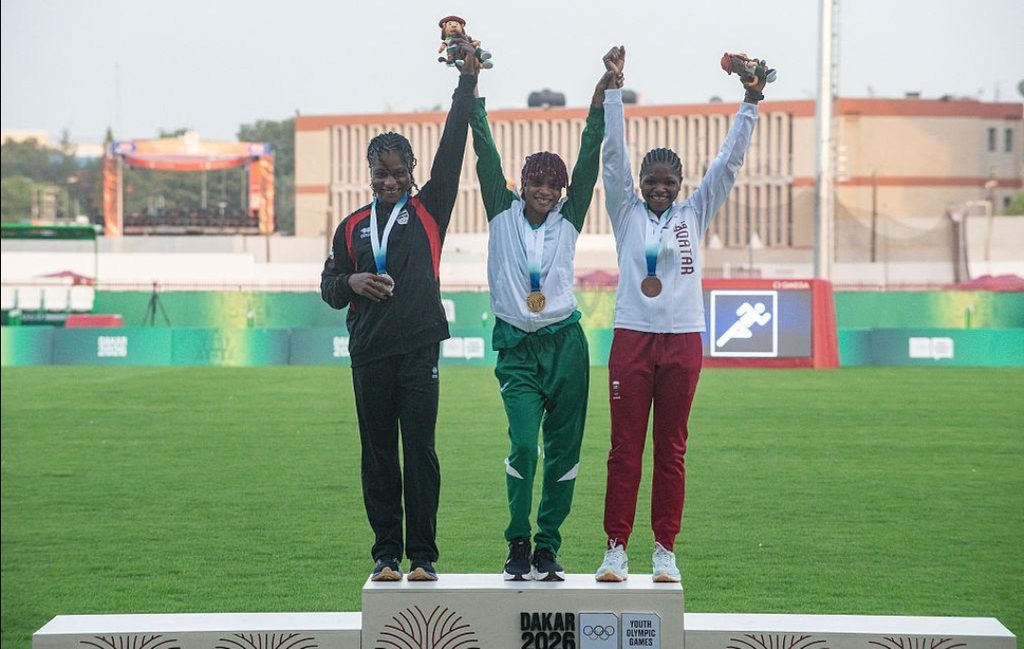
The remarkable double victory makes Nigeria the first country to secure both sprint titles at the same edition of the Youth Olympic Games, placing the country’s emerging athletics talents firmly on the international stage.
Bright delivered an outstanding performance in the men’s 100m final, clocking a personal-best time of 10.28 seconds to claim the gold medal. His victory also made him the first Nigerian athlete to win the men’s 100m title in the history of the Youth Olympic Games.
China’s Hangyu Zhang finished second in 10.57 seconds to secure silver, while Poland’s Szymon Dolega took bronze after crossing the finish line in 10.61 seconds.
The 15-year-old Nigerian had demonstrated his competitive strength earlier in the semi-finals, recording 10.34 seconds to win his heat and qualify for the final with the fastest time.
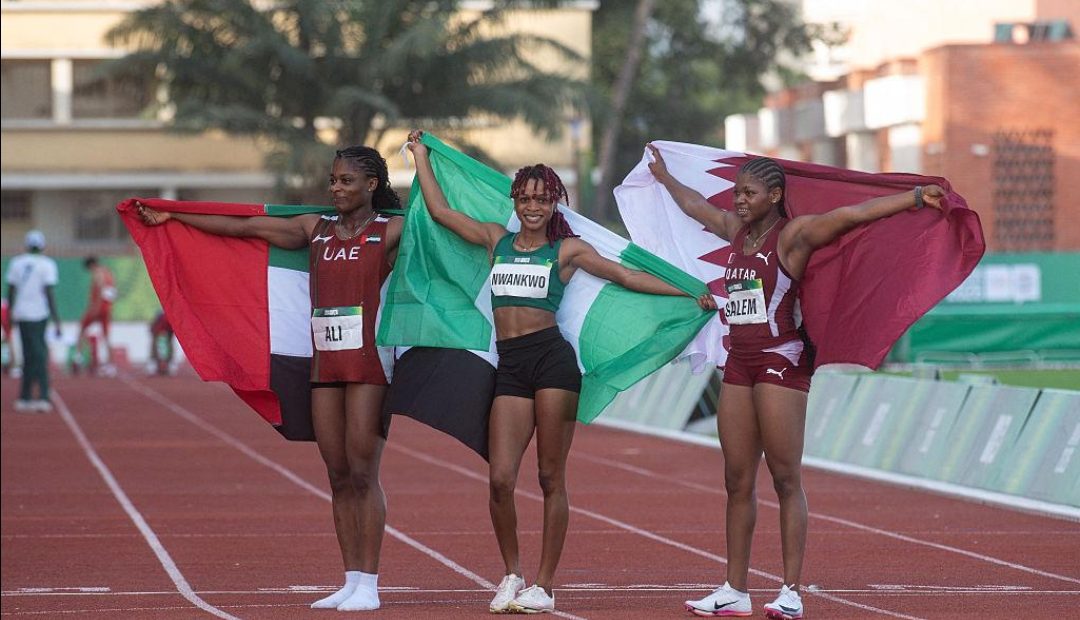
Nwankwo completed Nigeria’s historic sprint double by winning the women’s 100m final in 11.16 seconds, finishing ahead of Arwa Ali of the United Arab Emirates, who recorded 11.41 seconds, and Dana Salem of Qatar, who settled for bronze in 11.48 seconds.
Her victory makes her the third Nigerian woman to win the Youth Olympic 100m title, following Josephine Omaka, who triumphed at the Singapore 2010 edition, and Rosemary Chukwuma, who won gold at Buenos Aires 2018.
The 17-year-old had also established herself as a strong contender before the final, recording 11.53 seconds to win her semi-final heat.
The double gold achievement represents more than a medal-winning performance, highlighting the potential of Nigeria’s younger generation of athletes to compete successfully at international sporting events.
It also reinforces the importance of identifying, nurturing and supporting emerging sporting talents through structured training, quality coaching, adequate facilities and sustained investment in grassroots sports development.
For Nigeria’s sports sector, the performances of Bright and Nwankwo provide fresh evidence of the opportunities available through youth talent development and the need to strengthen pathways that enable promising athletes to progress to senior international competitions.
The success could also generate renewed interest in athletics among young Nigerians while encouraging greater participation by private-sector investors, corporate organisations and development partners in sports infrastructure, training programmes and talent discovery initiatives.
The two gold medals opened Nigeria’s medal account at the Dakar Games, giving the country’s contingent additional motivation as competitions continue across other sporting disciplines.
Nigeria is represented by 19 athletes at the Games, competing in six sports, including athletics, swimming, boxing, road cycling, table tennis and beach volleyball.
The Dakar 2026 Youth Olympic Games, which began on October 31, will run until November 13, bringing together young athletes from across the world.
Nigeria’s historic sprint double therefore provides an encouraging start to its athletics campaign and a proud moment for the country’s sporting community, as Bright and Nwankwo emerge as promising ambassadors of Nigerian talent on the global stage.
WHAT THIS MEANS FOR NIGERIA
International recognition: Nigeria has become the first country to win both men’s and women’s 100m titles at the same Youth Olympic Games.
Emerging talent: Gift Bright and Rosemary Nwankwo have demonstrated the country’s potential in youth athletics.
Investment opportunities: The achievement highlights opportunities for private-sector participation in sports development, talent management and athletics infrastructure.
Grassroots development: Sustained investment in coaching, training facilities and youth competitions will be essential to nurturing future champions.
National pride: The victories strengthen Nigeria’s sporting profile and provide inspiration for young athletes across the country.
Edited by Rosemary Aiyenale
Source: Punch Newspaper; World Athletics