

A New Generation of Investors Is Deepening the Nigerian Stock Market
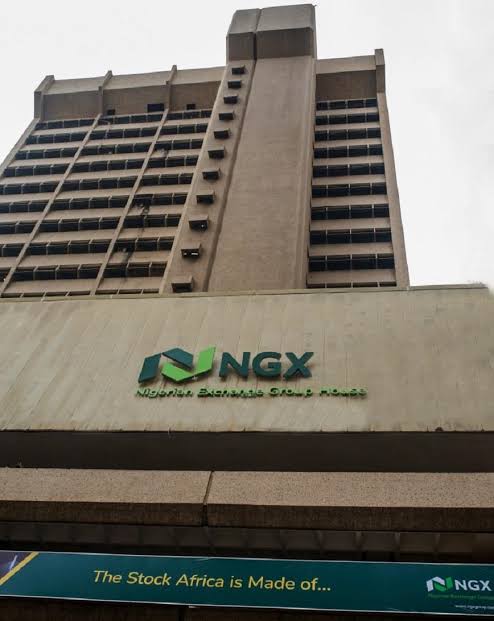
Diaspora participation, younger retail investors and Nigeria’s return to the FTSE Frontier Index are reshaping the NGX
The Nigerian Exchange is no longer being driven only by pension funds, banks, asset managers and the familiar circle of wealthy local investors. A broader change appears to be taking place beneath the market’s record-breaking numbers.
Two groups are becoming increasingly visible: Nigerians living abroad who want exposure to the home economy, and younger Nigerians who are discovering equities through investment apps, online communities and social media. Their growing interest, combined with Nigeria’s return to FTSE Russell’s Frontier Market classification, helps explain why the NGX has been attracting deeper participation and repeatedly reaching new highs.
The scale of the rally is striking. On September 17, 2026, the NGX All-Share Index stood at approximately 246,316 points. By comparison, the index crossed the historic 200,000-point threshold only in March. Data compiled by African Markets showed that the benchmark had gained more than 56 per cent since the beginning of the year by September 14.
Trading activity has also become heavier. In the week ended August 14, investors exchanged 12.153 billion shares worth N176.058 billion in 224,146 deals. The volume traded was 127 per cent higher than in the preceding week. This is important because a rising index without stronger turnover can be narrow and fragile. Increasing volumes and deal counts suggest that the market is attracting more attention and participation, even if liquidity remains concentrated in banking and other large, actively traded stocks.
The diaspora is finding a clearer route into Nigerian equities
For years, Nigerians abroad faced several obstacles when trying to invest at home. Opening and updating bank accounts could require physical presence, identity verification was cumbersome, and investors were often uncertain about how to repatriate capital and dividends.
That architecture is gradually changing. The Central Bank of Nigeria and the Nigeria Inter-Bank Settlement System introduced the Non-Resident Bank Verification Number platform in 2025, enabling Nigerians overseas to obtain a BVN remotely. The framework for Non-Resident Nigerian Investment Accounts also gives diaspora investors a more clearly defined channel through which they can fund Nigerian investments.
Digital brokers have built on these reforms. A Nigerian abroad can now complete much of the onboarding process remotely, open a securities account through a licensed stockbroker and hold shares through the Central Securities Clearing System. Where foreign currency is properly imported and documented with a Certificate of Capital Importation, the framework also permits the repatriation of capital, dividends and profits, subject to applicable rules and taxes.
The timing matters. Nigerians in the diaspora already send substantial sums home. The easier it becomes to direct a portion of those funds from consumption and family support into productive assets, the more important the diaspora could become to the capital market. Familiar Nigerian companies, high nominal dividend yields and the possibility of benefiting from a long-term domestic recovery can all be attractive.
However, there is an important caution. NGX’s published domestic and foreign participation reports do not separately classify diaspora Nigerians. It is therefore not yet possible to quantify their precise contribution to current turnover. The evidence is strongest on improved access and rising interest, not on an independently verified diaspora share of daily trading.
Gen Z and millennials are entering through their phones
The second shift may prove even more consequential. For many younger Nigerians, the stock market is no longer a distant institution represented by a broker’s office and paper share certificates. It is an app on a smartphone, a discussion on X, a WhatsApp investment group, a TikTok explainer or a YouTube analysis.
Technology is central to this transformation. Platforms such as Bamboo, Trove and Hisa, formerly known as Chaka, have made investing resemble the other digital services that young Nigerians already use every day. Established investment houses have also brought stockbroking online through platforms such as Afrinvestor by Afrinvest, MeriTrade by Meristem and Stanbic IBTC’s digital stockbroking service. NGX Invest provides a digital channel for public offers, while Cowrywise and InvestNaija have also helped retail investors participate in major offers through their phones.
These platforms remove much of the psychological and practical distance that once separated young people from the stock market. Digital onboarding reduces the need to visit a broker’s office. Simple interfaces allow users to search for companies, fund accounts, place orders and monitor portfolios from a mobile phone. Low minimum entry amounts make it possible to begin with modest savings, while price alerts, educational articles, charts and portfolio updates make investing more immediate and understandable. Some platforms also give users access to both Nigerian and foreign securities from one interface, which is particularly attractive to a generation accustomed to borderless digital products.
The appeal is not merely convenience. These apps package investing in a visual, interactive and continuous format. A young investor can encounter an analysis on social media, research the company online and act through an investment platform without leaving the phone. That shortened journey from information to transaction is one of the most important changes in Nigerian retail investing. It increases participation and market activity, although it can also accelerate impulsive decisions when online excitement moves faster than careful research.
This is not entirely new. Nigerian investment technology firms have spent several years lowering account-opening barriers and allowing customers to begin with relatively small sums. Earlier reporting on African investment platforms found that more than 80 per cent of users on some popular applications were aged 35 or below. More recent industry reporting has continued to identify online platforms as an important route through which younger Nigerians enter financial markets.
The most dramatic evidence of the new retail appetite came with the Dangote Petroleum Refinery public offer in September. Retail demand caused disruptions across several digital investment platforms. Bamboo reported that traffic rose to ten times its normal level within 30 minutes of the offer going live, while users of other platforms also reported access and transaction difficulties. The event did not disclose the ages of applicants, but its digital-first character and low minimum subscription strongly indicate how mass-market technology is widening participation.
Young investors are also producing a new market culture. Earnings announcements, dividend declarations, public offers and daily price movements are discussed almost instantly online. This can deepen participation, improve awareness and bring dormant investors back into the market. It can also create feedback loops in which attention generates trading, price movements generate more online discussion, and that discussion attracts new entrants.
The benefits come with risks. Social-media enthusiasm can encourage herd behaviour, unrealistic expectations and the promotion of shares without adequate attention to valuation, liquidity or corporate fundamentals. A deeper market must therefore be accompanied by stronger investor education, prompt enforcement against manipulation and clear rules for financial influencers.
FTSE status adds an international layer
The domestic retail revival is occurring alongside an important international development. FTSE Russell has confirmed that Nigeria will move from Unclassified to Frontier Market status from the opening of trading on September 21, 2026.
Nigeria was removed from FTSE Russell’s frontier indices in 2023 after foreign-exchange shortages made it difficult for international investors to repatriate funds. Its return follows improvements in foreign-exchange liquidity and market access, as well as reforms including the transition to a T+1 settlement cycle.
Reclassification does not guarantee an immediate flood of foreign money. Fund managers will still examine currency stability, market liquidity, free float, corporate governance and the ability to enter and exit positions efficiently. Nevertheless, inclusion restores Nigeria to the investible universe of funds that track or benchmark themselves against FTSE frontier indices. It also sends an important signal that the market’s accessibility has improved.
The effect is therefore both mechanical and psychological. Index-linked investors may need to acquire eligible Nigerian shares, while active global managers who had stopped considering the market now have a reason to look again.
Why the record high is not surprising
The NGX rally cannot be attributed to a single factor. Strong corporate earnings, banking-sector recapitalisation, dividend expectations, inflation-driven demand for assets, large public offers and improving confidence in parts of the economy have all contributed. In a high-inflation environment, equities can also be viewed as a partial hedge because the nominal revenues and asset values of some companies rise with prices.
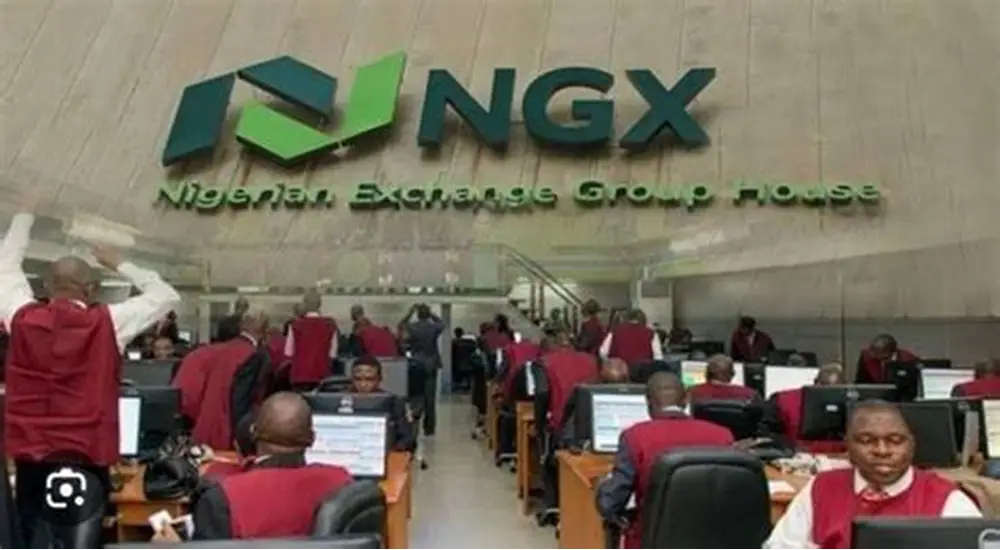
What is different is the combination now at work. Established domestic institutions remain influential. Digital access is drawing in younger retail investors. Regulatory changes are reducing friction for Nigerians abroad. FTSE reclassification is restoring international visibility. Major listings, especially the Dangote Refinery offer, are giving the public compelling reasons to open accounts and participate.
Against this background, the succession of all-time highs is less surprising. The market is not simply repricing listed companies. It is expanding the community of people who can participate in that repricing.
The next test is whether this renewed interest becomes durable investment rather than a short-lived speculative wave. Regulators and market operators should publish more detailed anonymised data on investor age, new account openings, dormant-account reactivation, retail turnover and non-resident participation. Better data would make it possible to distinguish a genuine broadening of the market from impressions created by social-media activity.
If the new investors remain engaged, insist on better corporate performance and learn to invest on fundamentals rather than excitement, Nigeria may be witnessing more than another bull run. It may be witnessing the emergence of a broader shareholder culture, one that connects the diaspora, a digitally confident generation at home and global frontier-market capital to the future of Nigerian enterprise.
THE INVESTMENT COMPASS
By Adesoji Adesugba, MCSI, ACS, FCTI