
Adesugba Calls for Early Dementia Diagnosis and National Strategy in Nigeria
Caring Lot chairman urges stronger elderly healthcare, caregiver support and an end to stigma at World Alzheimer’s Day 2026 commemoration in Abuja
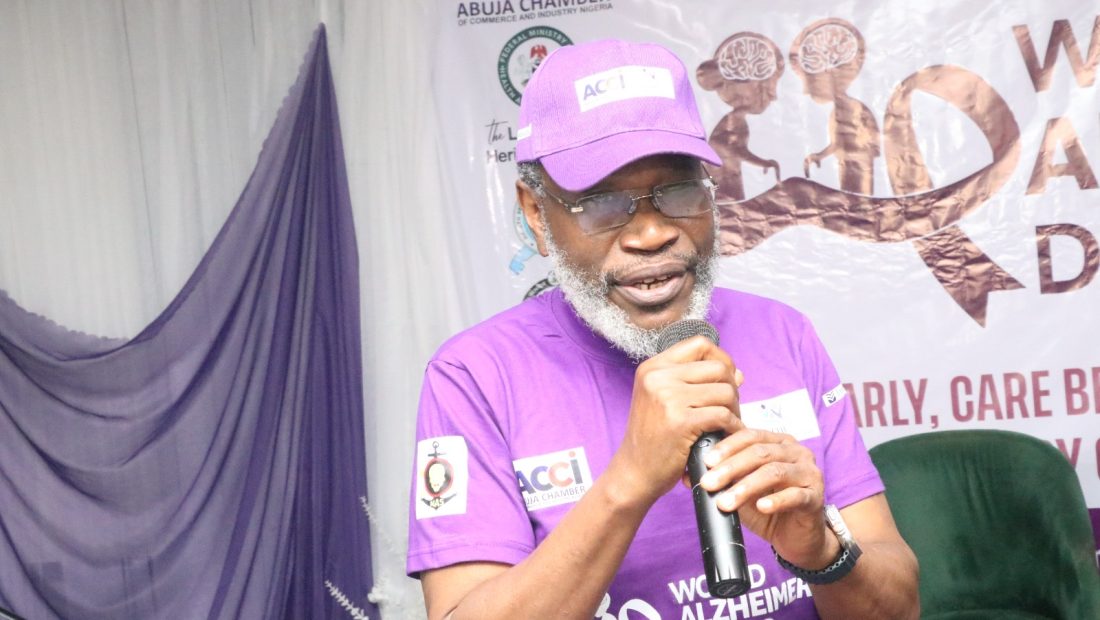
ABUJA, Nigeria The Chairman of Caring Lot International Initiative, Prof. Adesoji Adesugba, has called for early diagnosis of dementia, stronger support for caregivers and the development of a national strategy to address Alzheimer’s disease and other forms of dementia in Nigeria.
Adesugba made the call in his welcome address at the World Alzheimer’s Day 2026 commemoration organised by Caring Lot International Initiative in collaboration with the Abuja Chamber of Commerce and Industry, United Healthcare International Limited, the National Association of Seadogs, Sahara Deck, and other partners.
The event, held under the theme, “Know Early, Care Better: Changing the Story of Alzheimer’s in Nigeria,” focused attention on public awareness, timely diagnosis, compassionate care and the dignity of senior citizens.
Adesugba said dementia affects far more than memory, placing emotional, physical and financial pressure on families and caregivers. He noted that more than 57 million people are living with dementia worldwide and that nearly 10 million new cases occur each year. Alzheimer’s disease accounts for an estimated 60 to 70 per cent of dementia cases.
He warned that the burden is rising most rapidly in low and middle income countries, where more than six in ten people living with dementia are found. In Nigeria, available evidence suggests that close to five per cent of people aged 60 and above are living with dementia, although widespread underdiagnosis means the true figure may be higher.
“Dementia in our country is widely underreported, not because it is rare, but because of how we understand it and how, too often, we treat those who live with it,” Adesugba said.
He said early symptoms are often dismissed as normal ageing, interpreted as spiritual affliction or concealed because of stigma. This leaves many people without a formal diagnosis and denies families access to treatment, planning and support.
Calling for sustained public education in Nigerian languages, Adesugba urged government, health institutions, the media, schools, markets and religious organisations to help families recognise dementia and respond with knowledge rather than fear.
“A family cannot care well for what it does not understand, and a nation cannot plan for a burden it refuses to see,” he said, adding that Nigeria still lacks a national dementia strategy.
Adesugba also appealed for improved elderly healthcare, social protection and accessible diagnostic services. He said respectful treatment of older people must be reflected in everyday conduct at hospitals, airports, markets, offices, places of worship and public queues.
He drew particular attention to caregivers, noting that families provide most dementia care, often without payment or respite, and that women bear a large share of the responsibility.
“Those who give such care need respite, need support, and need to know that they do not stand alone. A society that supports its caregivers is a society that has understood what compassion truly costs,” he said.
The Caring Lot chairman thanked ACCI for its continuing collaboration, United Healthcare International Limited and other medical partners for healthcare services and medical outreach, and the National Association of Seadogs, Sahara Deck, for supporting the humanitarian initiative. He also acknowledged government agencies, professional bodies, foundations, corporate organisations, volunteers, healthcare workers, media partners and sponsors.
Reaffirming his commitment to programmes that promote the welfare and dignity of senior citizens, Adesugba said caring for older people should be regarded as a social responsibility rather than an act of charity.
He urged Nigerians to ensure that memory loss is met with patience, knowledge and love rather than shame, neglect or silence, and called for a society in which ageing is accompanied by dignity, care and respect.