NRC Opens Rail Network to Private Operators in Push to Boost Freight, Cut Logistics Costs
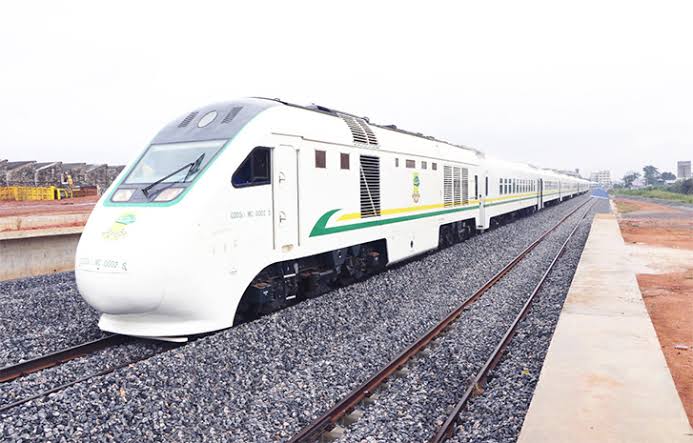
New track-access arrangement allows private firms to operate their own trains on publicly funded railway infrastructure as Nigeria seeks greater private-sector investment in rail transport.
The Nigerian Railway Corporation (NRC) has invited private operators to use its approximately 4,000-kilometre rail network for a fee, in a move aimed at expanding rail services, attracting private investment and improving freight and passenger transportation in Nigeria.
Under the arrangement, known as track access, private companies can supply their own locomotives, wagons and other rolling stock to operate on existing railway infrastructure, while paying the corporation for access to the tracks.
Managing Director of the NRC, Kayode Opeifa, disclosed the initiative at BusinessDay’s Mobility and Logistics Conference in Lagos, explaining that the corporation was open to private participation rather than relying exclusively on its own trains to deliver rail services.
“You can bring your train, bring your locomotive, bring your wagons, bring your everything. We will run it on it. You just pay us your money. We don’t want to run the trains alone,” Opeifa told stakeholders at the conference.
ALSO READ: FG Reaffirms Commitment to SMEs as Engines of Economic Growth
The arrangement could create opportunities for logistics companies, freight operators and other qualified investors to enter Nigeria’s railway market without having to build an entirely new rail network. It could also enable the NRC to generate revenue from existing infrastructure while encouraging additional services.
Private-sector participation gains ground
Opeifa cited the Lagos State Government as an example of the model, noting that it had been licensed to use the Lagos rail corridor through the Lagos Metropolitan Area Transport Authority (LAMATA).
He also disclosed that China Civil Engineering Construction Corporation (CCECC) had obtained a three-year licence from the NRC to operate a self-operated railway freight service, making it the first private and foreign contractor authorised to run standard-gauge rail freight services in Nigeria.
According to the NRC managing director, wider private-sector participation could help increase freight capacity, improve operational efficiency and strengthen rail’s contribution to the country’s logistics value chain.
For businesses, the initiative could provide an alternative for moving agricultural produce, raw materials, manufactured goods and other cargo, particularly along corridors where rail offers advantages over road transportation.
However, the extent to which the arrangement reduces logistics costs will depend on the terms of access, the reliability and condition of the railway infrastructure, the availability of connecting roads and terminals, and the efficiency of cargo handling.
Rehabilitation plans target key trade corridors
Alongside its private-sector access initiative, the NRC is pursuing plans to rehabilitate the legacy Lagos–Kano narrow-gauge railway and restore viable operations towards Kano, with proposed extensions towards Nguru and Kaura Namoda.
Opeifa also identified the reconstruction of the Baro–Minna narrow-gauge railway as a priority. The proposed connection would link Baro Port with the Lagos–Kano narrow-gauge line at Minna, potentially facilitating the movement of agricultural produce and industrial goods through an integrated inland-waterway and rail transport system.
If successfully implemented, the connection could strengthen access to markets for agricultural producers and businesses located away from major seaports, while creating opportunities for more efficient multimodal freight transportation.
The plans reflect a broader effort to make better use of existing railway assets while attracting investment to rehabilitate and expand the national network.
Ambitious expansion plans
The NRC’s broader railway development framework, known as Vision 2:5:10:20, aims to expand the network from approximately 4,000 kilometres towards 10,000 kilometres by 2028, with a longer-term ambition of reaching 20,000 kilometres.
The corporation is also considering new standard-gauge connections linking production centres and seaports to the national railway network.
Among the proposed projects are a standard-gauge connection from the Lagos–Ibadan railway corridor to Apapa Port and onward to Tin Can Island Port, as well as a proposed route linking Lekki Deep Sea Port through Ijebu-Ode and Sagamu to Kajola, where it would connect with the Lagos–Kano Standard Gauge Railway.
Such connections could improve the movement of containers and industrial cargo, strengthen links between ports and inland markets, and support businesses seeking alternatives to road-based freight transportation.
Policy and investment implications
The proposed track-access model represents a potential shift towards greater private-sector participation in Nigeria’s railway operations. Rather than requiring the NRC to provide every locomotive and wagon, the arrangement could allow private operators to bring additional capacity onto existing infrastructure.
For the model to deliver sustainable benefits, however, clear access charges, transparent licensing procedures, safety standards, operating schedules and maintenance responsibilities will be essential. Investors will also need predictable rules and confidence that access to the network will be commercially viable.
Effective coordination between railway operators, port authorities, state governments and logistics businesses will be equally important, particularly where freight movement depends on connections between rail, roads and inland waterways.
For Nigeria’s business community, the central question is whether improved access to rail infrastructure can translate into more reliable cargo movement, lower transport costs and stronger competitiveness for local producers and exporters.
If supported by effective regulation, infrastructure rehabilitation and sustained investment, private-sector participation could help unlock more of the economic value of Nigeria’s railway network and strengthen its role in the country’s trade and logistics system.