
Nigeria Records 2,512 Terrorism Convictions as Tinubu Calls for Technology-Driven Security Strategy
ABUJA, November 17, 2026
Nigeria has secured 2,512 convictions in 11 phases of terrorism-related trials, including 791 convictions in the latest phase, as the Federal Government intensifies efforts to combat terrorism through military operations, judicial prosecutions and intelligence-driven security strategies.
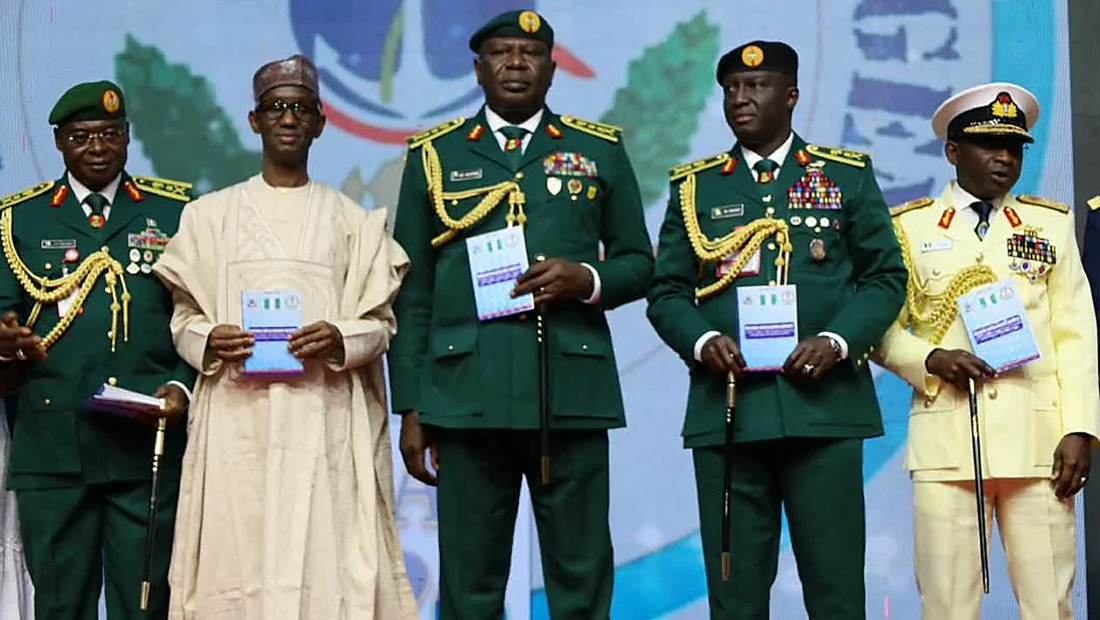
President Bola Tinubu disclosed this on Monday at the opening of the 2026 Annual Conference of the Chief of Defence Intelligence in Abuja. He was represented by the National Security Adviser, Mallam Nuhu Ribadu.
The President described the convictions as evidence of the government’s commitment to ensuring that individuals involved in terrorism are brought to justice, stressing that military action must be complemented by effective prosecution to dismantle terrorist networks and prevent their resurgence.
Tinubu said Nigeria’s evolving security challenges, including terrorism, banditry, kidnapping, cyber threats and transnational organised crime, required stronger intelligence capabilities, institutional collaboration and the adoption of modern technologies.
Highlighting recent operational achievements, the President disclosed that security forces had killed or arrested four of eight identified senior terrorist leaders.
He cited operations against Ahmed Ohida’s ISWAP southern expansion network, the elimination of senior Islamic State leader Abu Bilal Mainuki in May 2026, and the arrests of Abu Barra of Ansaru and Mamuda of Mahmudawa in 2025.
While commending the Armed Forces and other security agencies, Tinubu emphasised the need to translate operational successes into sustainable security for communities across the country.
He called for stronger intelligence-sharing and operational coordination among the Armed Forces, Defence Intelligence Agency, Department of State Services, National Intelligence Agency, Nigeria Police Force and other relevant institutions.
According to him, no single security agency possesses all the information and operational capabilities required to address the country’s complex security threats.
The President urged increased investment in artificial intelligence, machine learning, geospatial intelligence, cybersecurity and unmanned surveillance systems to strengthen intelligence gathering and improve operational decision-making.
He, however, stressed that technological deployment must be supported by appropriate oversight, data protection and human verification to ensure accountability.
Tinubu also reaffirmed Nigeria’s commitment to international security partnerships, particularly in intelligence sharing, training and technological cooperation, identifying the United States, United Kingdom, China, United Arab Emirates, Türkiye and neighbouring African countries as partners in the country’s security engagements.
The Minister of Defence, retired Gen. Christopher Musa, reinforced the need for proactive intelligence gathering, describing credible and timely information as essential to successful military operations.
He also reaffirmed the Federal Government’s commitment to indigenous defence production, noting that local manufacturing would strengthen Nigeria’s capacity to develop sustainable military capabilities.
Similarly, the Chief of Defence Staff, Gen. Olufemi Oluyede, called for increased investment in advanced data analytics, artificial intelligence, geospatial intelligence and unmanned systems.
He urged the military to embrace proactive operational strategies capable of identifying and disrupting security threats before they materialise.
The conference, organised by the Defence Intelligence Agency, was themed “Optimising Intelligence through Technological Innovations and Strategic Partnerships in a Complex Security Environment.” It also coincided with the 40th anniversary of the National Security Agencies Act of 1986.
Edited by Rosemary Aiyenale
Source: News Agency of Nigeria (NAN)