NEPZA Confirms Adesugba’s Clean Exit as Record of Reform Endures
Former Managing Director cleared of all obligations three years after a tenure that settled the LADOL–Samsung dispute, expanded the free zones and opened the scheme to education and technology
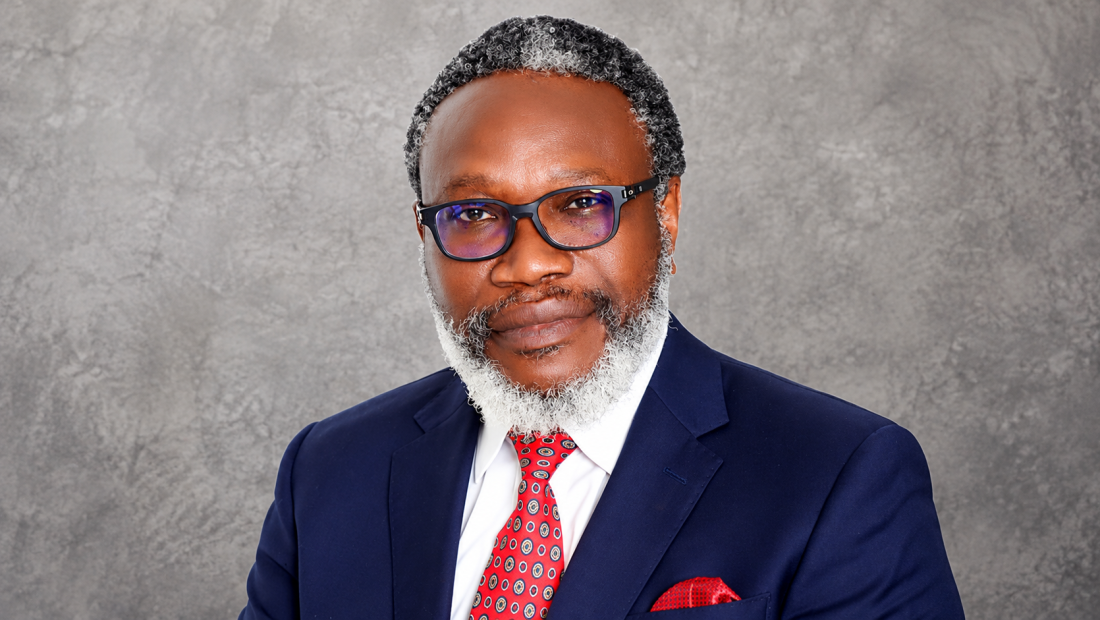
The Nigeria Export Processing Zones Authority (NEPZA) has formally confirmed that Prof. Adesoji Adesugba, its former Managing Director and Chief Executive Officer, completed his tenure with a clean administrative record, closing the books on a three-year stewardship that many in the free zones community still regard as one of the most consequential in the Authority’s history.
In a letter titled “Confirmation of Service and Administrative Clearance”, dated 23 November 2026 and signed by Mrs. H. S. Kamba, Director (Corporate Services), the Authority certified that Prof. Adesugba served as Managing Director/CEO from 26 June 2020 to 13 October 2023, following his appointment by the President of the Federal Republic of Nigeria, and that he discharged his responsibilities in furtherance of the Authority’s statutory mandate and the development of Nigeria’s Free Zones Scheme. After verifying its records, NEPZA confirmed that he has no outstanding financial indebtedness or unretired official advances, holds no official property or accountable assets requiring return, faces no disciplinary query, pending proceeding or unresolved sanction, and has fulfilled every administrative obligation relating to his separation from office.
For a public officer who told his management team more than once that he could not afford to fail and that the Authority must follow due process at all times, whoever pressed it to do otherwise, the letter is a fitting seal on a tenure built on that principle.
Appointed in a pandemic, focused on results
Prof. Adesugba assumed office in mid-2020, in the middle of the COVID-19 lockdown, when global investment flows had all but frozen. Announcing the appointment, the then Minister of Industry, Trade and Investment, Otunba Niyi Adebayo, said his wealth of experience and academic exposure would add value to NEPZA’s core mandate. Within his first year, commentators were already writing of reforms that had entrenched transparency and accountability at the Authority.
The most celebrated of his interventions was the settlement of the protracted dispute between the Lagos Deep Offshore Logistics Base (LADOL) and Samsung Heavy Industries Nigeria over the LADOL Free Zone. The conflict, which began in 2018, had kept investments estimated at over $7 billion out of reach and cost some 3,000 Nigerians their jobs. Soon after taking office, Prof. Adesugba established the NEPZA Alternative Dispute Resolution Centre, and in February 2022 the parties signed a settlement in Abuja that both commended NEPZA and the Nigerian Ports Authority for facilitating. “As soon as I resumed office, we set up the NEPZA Alternative Dispute Resolution Centre, and you can see, this is the outcome,” he said at the signing, projecting that the truce would create more than 10,000 direct jobs.
He brought the same instinct for resolution to the long-running friction between free zone incentives and tax administration. In June 2022 NEPZA signed a Memorandum of Understanding with the Federal Inland Revenue Service to clarify the tax treatment of free zone enterprises and end years of suspicion over the scheme’s exemptions, an arrangement the two agencies later refined to remove remaining grey areas.
A larger and more attractive scheme
Under his leadership the free zones network expanded markedly, from 42 licensed zones in 2021 to more than 50 by 2023. In 2021 the Federal Government approved six new Special Economic Zones and designated four international airports as free trade zones. Licence validity for zone operators was extended to five years, giving investors greater certainty. By 2023 the scheme’s cumulative investment stood at about ₦14.1 trillion, roughly $30 billion, while NEPZA reported $346.6 million in fresh foreign direct investment and more than 30,000 new jobs between 2020 and the first quarter of 2023. The zones generated ₦35.1 billion in customs duty for government in 2021 alone, and over 76 infrastructure projects were completed across the zones during the period. In 2022 the Africa Economic Zones Organisation, which brings together free zone authorities from across the continent, named NEPZA’s flagship entry Nigeria’s Outstanding Social Impact Special Economic Zone.
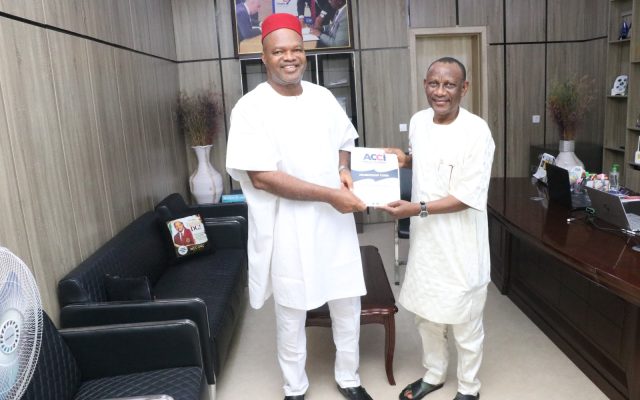
Prof. Adesugba also pushed the scheme into new territory. He initiated a partnership with Binance and Talent City toward Nigeria’s first virtual free zone, championed a medical free zone in Lagos, and set up a task team to move the long-stalled Funtua Cotton Free Zone forward with the Katsina State Government. He received the University of Abuja’s application to become Nigeria’s first education free zone, in partnership with the Abuja Chamber of Commerce and Industry, an initiative aimed at bringing industry closer to students and research closer to the market.
Inside the Authority, he introduced health insurance and a retirement package for staff, and made promotion a matter of examination rather than favour, reforms that former colleagues continue to cite as his most personal legacy.
Four decades of public service
The NEPZA years capped a public service career of more than four decades. Prof. Adesugba joined the Nigeria Customs Service in 1982 and served for 17 years, including postings at Apapa Port and Tin Can Island Port. At the Nigerian Investment Promotion Commission he led investment promotion missions to South-East Asia and China, and he later served at the Bureau of Public Enterprises. From 2009 to 2013 he was Chairman of the Industrial Arbitration Panel, the Federal Government agency charged with resolving industrial disputes. He is also the initiator and founder of the Nigerian Economic Zones Association (NEZA), which brings together free zone operators and developers.
Building the next generation
Since leaving NEPZA, Prof. Adesugba has turned his energy to skills, enterprise and the link between research and industry. As Chairman and Founder of the ACCI Business Entrepreneurship, Skills and Technology (BEST) Centre, which he established in 2017, he has overseen the training of more than 5,000 young Nigerians in a range of vocational and technical skills. The Centre’s new building was opened in December 2025.
He serves as First Deputy President of the Abuja Chamber of Commerce and Industry and National Vice President of NACCIMA, and sits on NACCIMA’s Education Committee. In August 2025 he was inaugurated by the Executive Secretary of the Tertiary Education Trust Fund (TETFund), Arc. Sonny Echono, as Co-Chairman of the TETFund–NACCIMA Joint Technical Committee, where he has proposed a national network of Research-to-Commercialisation Hubs to move university research into productive enterprise. He has also played a leading role in the TETFund-linked National Research Fair and International Symposium, themed “Research to Market: Ideas2Wealth”, at the ACCI Trade Fair Complex.
His thinking on that agenda is set out in his new book, From Laboratory to Marketplace: Bridging Industry and Academia for Innovation-Led Development, With Lessons for Nigeria and Africa, published in 2026 by Media Synergy Books with a foreword by Engr. Umar B. Bindir, PhD.
In the solid minerals sector, Prof. Adesugba founded the Gemological Institute of Nigeria, the first of its kind in the country, and developed Nigeria’s first undergraduate curriculum in gemmology and jewellery making at Yakubu Gowon University, Abuja, where he teaches in the Department of Geology and Gemology as an Adjunct Professor. He also represents the organised private sector abroad, most recently as a FEWACCI delegate at the OECD–Morocco Country Programme in Rabat in June 2026, where he spoke on implementing the African Continental Free Trade Area.
A record that speaks for itself
Three years after his exit, NEPZA’s confirmation letter adds an official voice to what investors, zone operators and staff have long said: that Prof. Adesugba left the Authority stronger than he found it, and left it with his record intact. For a scheme whose credibility depends on investor confidence and due process, that combination of results and integrity remains the benchmark.