
NAPRI Showcases Livestock Innovations, Improved Breeds, Feed Solutions at TETFund Research Fair

ABUJA – November 26, 2026
The National Animal Production Research Institute (NAPRI), Ahmadu Bello University, Shika-Zaria, has showcased improved livestock breeds, feed research, dairy products and animal production technologies aimed at boosting local livestock productivity and strengthening Nigeria’s agricultural value chain at the ongoing 2nd Tertiary Education Trust Fund (TETFund) National Research Fair and Exhibition in Abuja.
The exhibition, themed “Research to Market: Driving Innovation, Enterprise and National Prosperity,” is holding from November 23 to 27, 2026, at the Abuja Trade and Convention Centre, Airport Road, and brings together research institutions, innovators and industry stakeholders to promote the commercialisation of research outputs.
NAPRI’s participation highlights efforts to translate decades of livestock research into practical and market-ready solutions that can improve animal production, support farmers, create business opportunities and reduce Nigeria’s dependence on imported livestock products.
Speaking with Chamber Telegraph, Dr. Muhammed Sa’idu Tanko, the Deputy Director and representative of the institute , said NAPRI was established in 1928 as the Shika Stud Farm, with an initial focus on improving indigenous cattle breeds and pasture development to support livestock production.
He said the institution was renamed the National Animal Production Research Institute in 1976, with its research scope subsequently expanding to livestock genetics, animal nutrition, reproductive improvement, pasture development and capacity building across the livestock value chain.
Tanko disclosed that the institute operates 10 research programmes and about 11 service units, covering animal production, biotechnology, beef and dairy production, food and nutrition, equine and camel research, small ruminant production, feed and nutrition, among other areas.
He said specialised services, including artificial insemination and animal health, also support the institute’s research and livestock development activities.
According to him, NAPRI is increasingly prioritising the commercialisation and wider adoption of research findings, moving beyond knowledge generation to ensure that innovations reach farmers, entrepreneurs and other stakeholders in the livestock sector.
As part of its commercialisation drive, the institute showcased natural yoghurt produced entirely from cow’s milk, available in sugar-free and sweetened varieties.
Tanko said the product had undergone SON registration and NAVTAC certification, while its licensing renewal was ongoing.
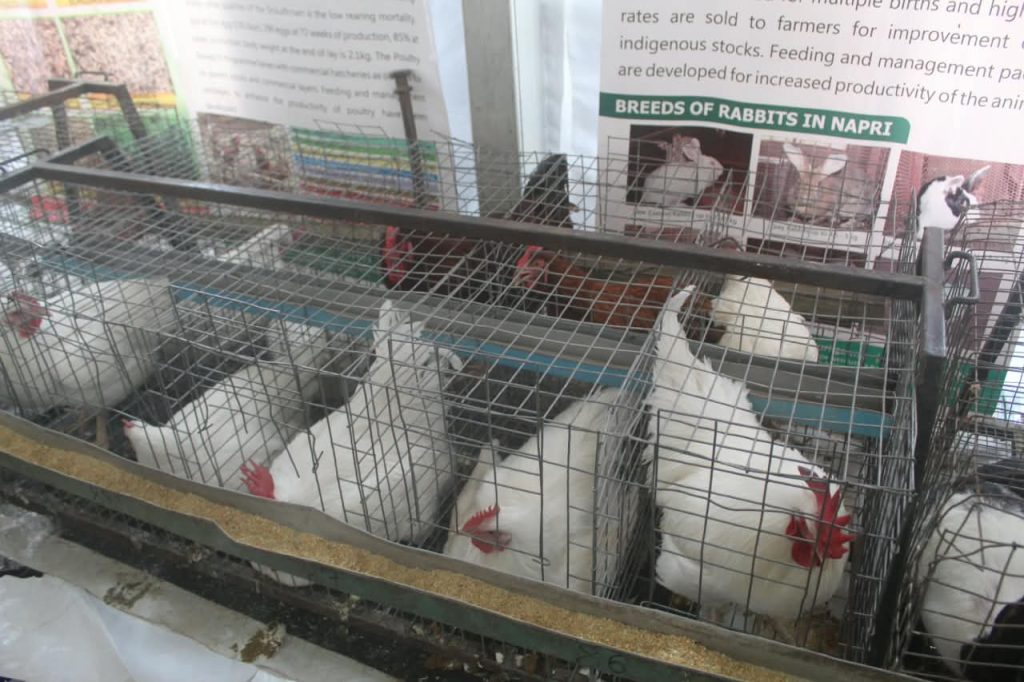
Another innovation highlighted was Shika Brown, a Nigerian-developed layer chicken breed whose development commenced in 1985 and was registered in 2000.
The breed has undergone decades of research to improve its adaptability to local environmental conditions and disease resistance. NAPRI’s presentation also highlighted its climate resilience and egg-laying capacity of approximately 280 eggs per bird annually.
The institute is also developing a broiler line with improved hardiness, reduced fat deposition and feed-conversion ratios estimated at between 1.3 and 1.35, with the aim of improving meat production efficiency.
These innovations are expected to strengthen indigenous livestock production, enhance productivity and reduce dependence on imported breeds and livestock-related products.
In another interview,
Dr Musa Abdulrahman the Programme Leader of Swine and Rabbits Research NAPRI’s Swine-Rabbit Research Programme, explained that the institute employs crossbreeding techniques to improve the productivity and market value of locally available rabbit and pig breeds.
He said the programme focuses on breeding, research and production, particularly improving animal size, weight, growth performance and other desirable characteristics.
According to him, selected foreign breeds are crossed with local varieties to develop improved animals that combine superior production traits with the ability to adapt to local conditions.
Using rabbits as an example, he noted that some indigenous breeds weigh about two kilogrammes, while selected foreign breeds can attain approximately five kilogrammes.
Through controlled crossbreeding, researchers are working towards developing improved rabbits capable of achieving better growth and market value.
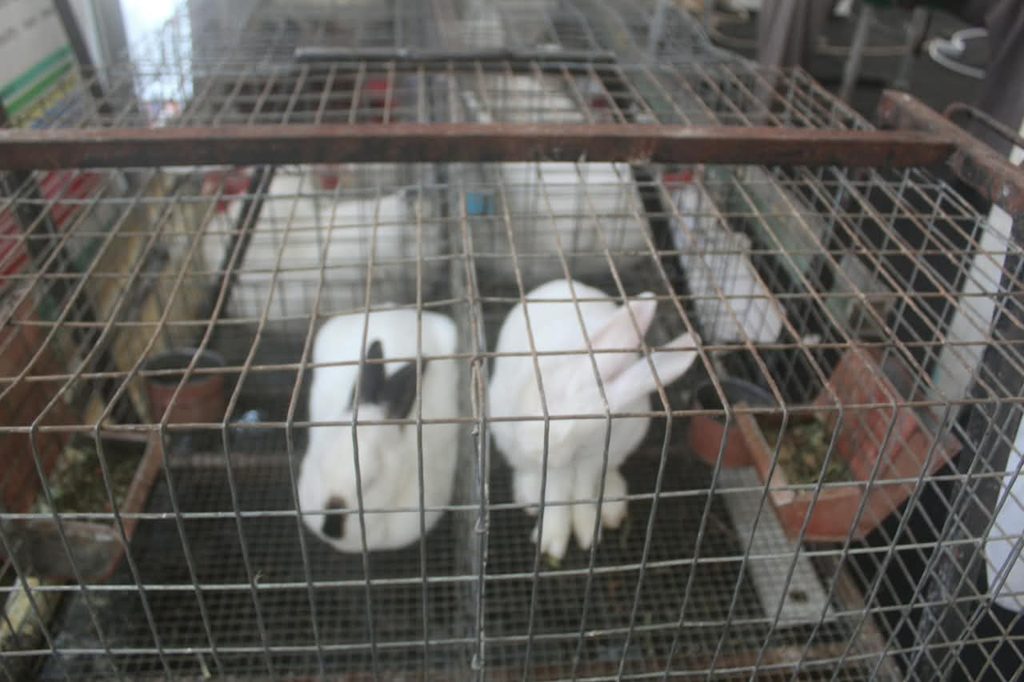
NAPRI’s research findings indicate that improved rabbits can attain about 3.5 kilogrammes at market age, grow to approximately five kilogrammes as adults and produce an average of 10 offspring per litter.
In swine production, the programme utilises breeds such as Large White, Duroc, Pietrain, Hampshire and Landrace to improve local pig production.
The breeding initiatives are expected to provide farmers with better-performing animals, increase meat production and strengthen the livestock value chain.
Dr S.A. Abubakar Programme Leader of Feeds and Nutrition Research Programme NAPRI’s, identified inadequate feed resources and the shrinking availability of grazing land as major challenges confronting livestock production in Nigeria.
He explained that pressure on grazing areas, partly resulting from overgrazing and population growth, has intensified the competition for feed resources, particularly during the dry season.
Dr Abubakar stressed that feed quality and availability directly influence animal growth, productivity and the quality of meat and other livestock products.
To address the challenge, he said researchers assess available forage resources based on their quantity, nutritional composition and suitability for different categories of livestock.
The assessment covers essential nutritional components, including vitamins, minerals, fibre, energy and water content, to determine the suitability of feed materials for animal production.
He explained that feed evaluation is conducted across the early and late dry seasons, as well as the early and late rainy seasons, to monitor seasonal variations in forage availability and nutritional quality.
Dr Abubakar further noted that livestock generally consume feed equivalent to approximately four per cent of their body weight daily. By this estimate, a 400-kilogramme animal requires about 16 kilogrammes of feed per day.
The institute is therefore exploring alternative feed resources and developing improved forage options to address shortages, enhance animal nutrition and promote sustainable livestock production.
NAPRI’s pasture research programme is also focused on developing and promoting improved grass and legume varieties capable of supporting livestock production throughout the year.
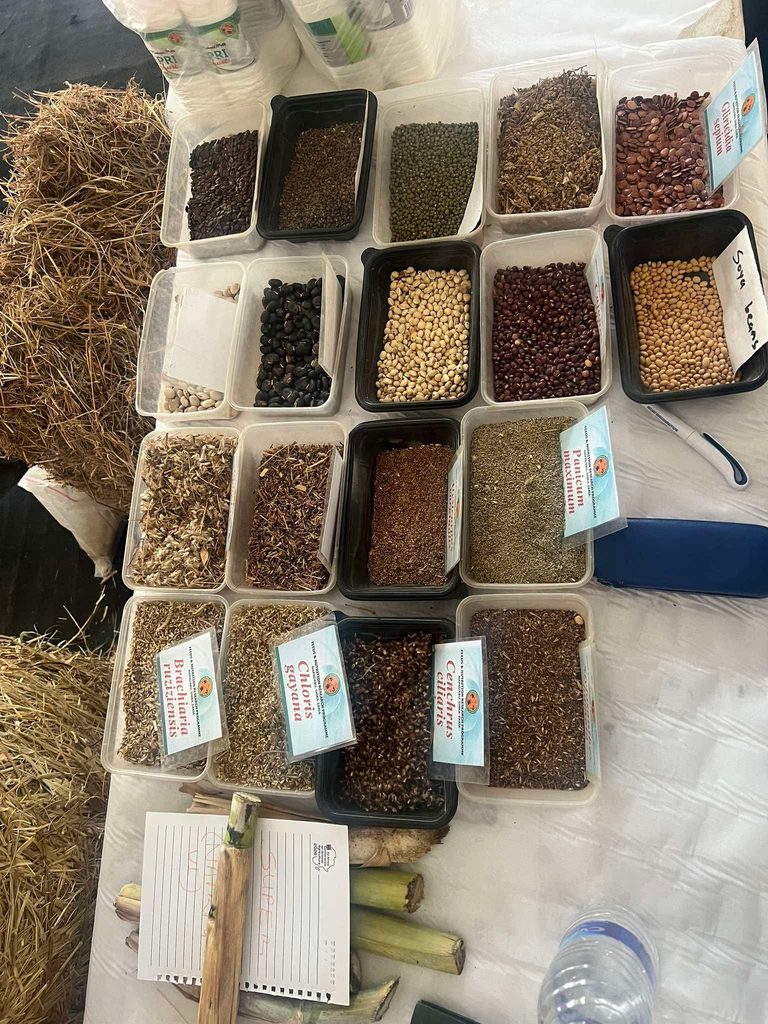
Among the forage species highlighted were Cenchrus ciliaris (buffel grass), Chloris gayana and Panicum maximum, alongside other feed resources.
The institute has developed registered pasture varieties and is collaborating with the National Seed Council to identify commercial seed producers and promote the wider adoption of improved pasture species.
The collaboration is aimed at bridging the gap between research development and commercial seed production, ensuring that quality pasture seeds are more accessible to livestock farmers.
Buffel grass, scientifically known as Cenchrus ciliaris, was identified as one of the important forage species with significant potential for livestock feed production.
The presentation noted that some buffel grass seeds had previously been imported at a reported cost of about ₦7,000 per kilogramme, reinforcing the need to strengthen local seed production and reduce import dependence.
NAPRI’s participation in the 2nd TETFund National Research Fair and Exhibition underscores the importance of connecting research institutions with businesses, investors, farmers and other stakeholders capable of transforming scientific discoveries into commercially viable products and services.
Through its improved livestock breeds, dairy products, breeding technologies, feed research and pasture development initiatives, the institute is demonstrating the potential of research to drive food security, agricultural entrepreneurship, employment generation and economic growth.
The exhibition offers researchers an opportunity to engage potential investors and commercial partners, attract market interest and explore pathways for taking locally developed innovations beyond research institutions into commercial production.
Against the backdrop of persistent feed shortages, low livestock productivity and dependence on imported livestock resources, NAPRI’s innovations highlight the importance of strengthening indigenous research and developing home-grown solutions to Nigeria’s agricultural challenges.
Its participation reinforces the central message of this year’s exhibition: research must go beyond knowledge generation to deliver practical innovations, viable enterprises and measurable contributions to national prosperity.
Edited by Rosemary Aiyenale National Animal Production Research Institute (NAPRI), Ahmadu Bello University, Shika-Zaria, has showcased improved livestock breeds, feed research, dairy products and animal production technologies aimed at boosting local livestock productivity and strengthening Nigeria’s agricultural value chain at the ongoing 2nd Tertiary Education Trust Fund (TETFund) National Research Fair and Exhibition in Abuja.
The exhibition, themed “Research to Market: Driving Innovation, Enterprise and National Prosperity,” is holding from November 23 to 27, 2026, at the Abuja Trade and Convention Centre, Airport Road, and brings together research institutions, innovators and industry stakeholders to promote the commercialisation of research outputs.
NAPRI’s participation highlights efforts to translate decades of livestock research into practical and market-ready solutions that can improve animal production, support farmers, create business opportunities and reduce Nigeria’s dependence on imported livestock products.
Speaking with Chamber Telegraph, Dr. Muhammed Sa’idu Tanko, the Deputy Director and representative of the institute , said NAPRI was established in 1928 as the Shika Stud Farm, with an initial focus on improving indigenous cattle breeds and pasture development to support livestock production.
He said the institution was renamed the National Animal Production Research Institute in 1976, with its research scope subsequently expanding to livestock genetics, animal nutrition, reproductive improvement, pasture development and capacity building across the livestock value chain.
Tanko disclosed that the institute operates 10 research programmes and about 11 service units, covering animal production, biotechnology, beef and dairy production, food and nutrition, equine and camel research, small ruminant production, feed and nutrition, among other areas.
He said specialised services, including artificial insemination and animal health, also support the institute’s research and livestock development activities.
According to him, NAPRI is increasingly prioritising the commercialisation and wider adoption of research findings, moving beyond knowledge generation to ensure that innovations reach farmers, entrepreneurs and other stakeholders in the livestock sector.
As part of its commercialisation drive, the institute showcased natural yoghurt produced entirely from cow’s milk, available in sugar-free and sweetened varieties.
Tanko said the product had undergone SON registration and NAVTAC certification, while its licensing renewal was ongoing.
Another innovation highlighted was Shika Brown, a Nigerian-developed layer chicken breed whose development commenced in 1985 and was registered in 2000.
The breed has undergone decades of research to improve its adaptability to local environmental conditions and disease resistance. NAPRI’s presentation also highlighted its climate resilience and egg-laying capacity of approximately 280 eggs per bird annually.
The institute is also developing a broiler line with improved hardiness, reduced fat deposition and feed-conversion ratios estimated at between 1.3 and 1.35, with the aim of improving meat production efficiency.
These innovations are expected to strengthen indigenous livestock production, enhance productivity and reduce dependence on imported breeds and livestock-related products.
In another interview,
Dr Musa Abdulrahman the Programme Leader of Swine and Rabbits Research NAPRI’s Swine-Rabbit Research Programme, explained that the institute employs crossbreeding techniques to improve the productivity and market value of locally available rabbit and pig breeds.
He said the programme focuses on breeding, research and production, particularly improving animal size, weight, growth performance and other desirable characteristics.
According to him, selected foreign breeds are crossed with local varieties to develop improved animals that combine superior production traits with the ability to adapt to local conditions.
Using rabbits as an example, he noted that some indigenous breeds weigh about two kilogrammes, while selected foreign breeds can attain approximately five kilogrammes.
Through controlled crossbreeding, researchers are working towards developing improved rabbits capable of achieving better growth and market value.
NAPRI’s research findings indicate that improved rabbits can attain about 3.5 kilogrammes at market age, grow to approximately five kilogrammes as adults and produce an average of 10 offspring per litter.
In swine production, the programme utilises breeds such as Large White, Duroc, Pietrain, Hampshire and Landrace to improve local pig production.
The breeding initiatives are expected to provide farmers with better-performing animals, increase meat production and strengthen the livestock value chain.
Dr S.A. Abubakar Programme Leader of Feeds and Nutrition Research Programme NAPRI’s, identified inadequate feed resources and the shrinking availability of grazing land as major challenges confronting livestock production in Nigeria.
He explained that pressure on grazing areas, partly resulting from overgrazing and population growth, has intensified the competition for feed resources, particularly during the dry season.
Dr Abubakar stressed that feed quality and availability directly influence animal growth, productivity and the quality of meat and other livestock products.
To address the challenge, he said researchers assess available forage resources based on their quantity, nutritional composition and suitability for different categories of livestock.
The assessment covers essential nutritional components, including vitamins, minerals, fibre, energy and water content, to determine the suitability of feed materials for animal production.
He explained that feed evaluation is conducted across the early and late dry seasons, as well as the early and late rainy seasons, to monitor seasonal variations in forage availability and nutritional quality.
Dr Abubakar further noted that livestock generally consume feed equivalent to approximately four per cent of their body weight daily. By this estimate, a 400-kilogramme animal requires about 16 kilogrammes of feed per day.
The institute is therefore exploring alternative feed resources and developing improved forage options to address shortages, enhance animal nutrition and promote sustainable livestock production.
NAPRI’s pasture research programme is also focused on developing and promoting improved grass and legume varieties capable of supporting livestock production throughout the year.
Among the forage species highlighted were Cenchrus ciliaris (buffel grass), Chloris gayana and Panicum maximum, alongside other feed resources.
The institute has developed registered pasture varieties and is collaborating with the National Seed Council to identify commercial seed producers and promote the wider adoption of improved pasture species.
The collaboration is aimed at bridging the gap between research development and commercial seed production, ensuring that quality pasture seeds are more accessible to livestock farmers.
Buffel grass, scientifically known as Cenchrus ciliaris, was identified as one of the important forage species with significant potential for livestock feed production.
The presentation noted that some buffel grass seeds had previously been imported at a reported cost of about ₦7,000 per kilogramme, reinforcing the need to strengthen local seed production and reduce import dependence.
NAPRI’s participation in the 2nd TETFund National Research Fair and Exhibition underscores the importance of connecting research institutions with businesses, investors, farmers and other stakeholders capable of transforming scientific discoveries into commercially viable products and services.
Through its improved livestock breeds, dairy products, breeding technologies, feed research and pasture development initiatives, the institute is demonstrating the potential of research to drive food security, agricultural entrepreneurship, employment generation and economic growth.
The exhibition offers researchers an opportunity to engage potential investors and commercial partners, attract market interest and explore pathways for taking locally developed innovations beyond research institutions into commercial production.
Against the backdrop of persistent feed shortages, low livestock productivity and dependence on imported livestock resources, NAPRI’s innovations highlight the importance of strengthening indigenous research and developing home-grown solutions to Nigeria’s agricultural challenges.
Its participation reinforces the central message of this year’s exhibition: research must go beyond knowledge generation to deliver practical innovations, viable enterprises and measurable contributions to national prosperity.
Edited by Rosemary Aiyenale