
CBN to Consider Banks’ Challenges as Data Localisation Deadline Approaches
Apex bank offers regulatory guidance ahead of January 2027 deadline, while survey identifies implementation gaps across financial institutions.
LAGOS – October 30th, 2026
The Central Bank of Nigeria (CBN) has pledged to consider challenges confronting banks and other financial institutions in complying with the country’s data localisation requirements, as regulators intensify efforts to prepare the financial sector for the January 1, 2027 deadline.
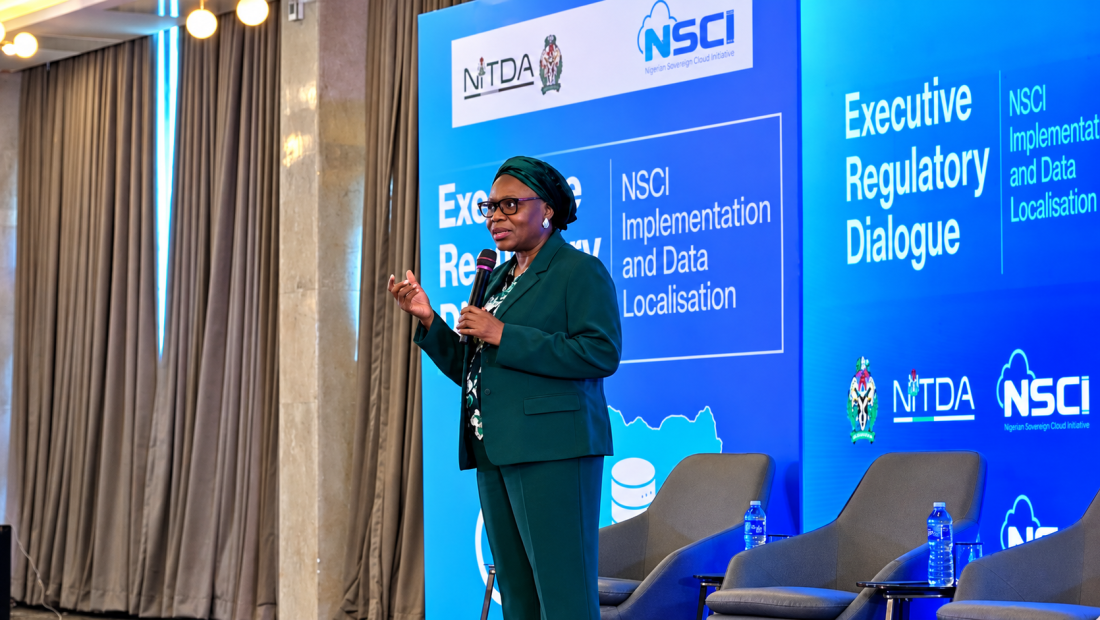
The assurance was given by Dr Rakiya Yusuf, Director of the CBN’s Payments System Supervision Department, during an Executive Regulatory Dialogue on the National Sovereign Cloud Initiative and Data Localisation Implementation in Lagos.
Yusuf said the apex bank was prioritising stakeholder engagement and regulatory guidance to support institutions in meeting the requirements of its June 15 circular, which mandates that payment transaction data generated in Nigeria be stored and managed within the country.
She encouraged institutions experiencing implementation difficulties to formally communicate their challenges and proposed compliance plans to the Payments System Supervision Department for consideration on a case-by-case basis.
She added that feedback from the engagement would help the CBN develop additional guidance, including frequently asked questions, to clarify areas of uncertainty.
However, she warned that deliberate efforts to frustrate compliance could attract regulatory sanctions.
A survey presented by the National Information Technology Development Agency (NITDA) revealed significant gaps in the sector’s preparedness.
According to Dr Muhammad Lawal, Special Assistant to the NITDA Director-General on Policy, 22 out of 44 financial institutions surveyed had yet to commence implementation.
While 26 institutions expected to complete the necessary measures before the deadline, 15 considered timely completion unlikely or very unlikely, while three were unable to assess their readiness.
The survey further indicated that 70 per cent of institutions had identified relevant data and systems, 23 per cent had engaged local service providers, while 25 per cent had secured board approval. Only 18 per cent had commenced migration or remediation activities.
Lawal identified uncertainty surrounding the scope of payment transaction data and the interpretation of local data storage requirements as major concerns affecting implementation.
In his keynote address, CBN Deputy Governor, Financial System Stability, Dr Lamido Yuguda, said cloud computing offered opportunities to improve operational efficiency, scalability and innovation but also introduced risks relating to cybersecurity, data protection and dependence on third-party technology providers.
He stressed that keeping data within Nigeria would not automatically guarantee security, noting that financial institutions must maintain effective cybersecurity, business continuity and disaster recovery arrangements.
Yuguda called for a balanced implementation approach that would strengthen financial system resilience without undermining innovation or restricting access to global technology.
Meanwhile, the survey showed that 79 per cent of digital infrastructure providers were ready to accommodate financial-sector workloads, while 74 per cent indicated their capacity to onboard new customers within three months.
Managing Director of Digital Realty Nigeria, Mr Ikechukwu Nnamani, said local infrastructure providers were positioned to support the transition but would require sustained investment to expand capacity.
He estimated that developing a typical megawatt-scale data centre could cost between $12 million and $15 million and take two to three years to complete.
Representatives of the fintech and cloud computing sectors also identified financing, electricity supply, connectivity, security and regulatory clarity as critical issues requiring attention.
The dialogue brought together regulators, financial institutions, fintech operators and technology providers to develop practical solutions ahead of the compliance deadline.
BUSINESS OUTLOOK
Nigeria’s data localisation policy could stimulate investment in domestic data centres, cloud computing, cybersecurity and other digital infrastructure services.
It also presents opportunities for local technology companies to expand their services and strengthen the country’s digital economy.
However, compliance costs, infrastructure limitations and the need for reliable power and connectivity could place additional pressure on banks and fintech operators.
The success of the policy will therefore depend on balancing data security and national digital sovereignty with affordability, financial-sector stability and continued innovation.
Edited by Rosemary Aiyenale
Source: Nigerian News Agency (NAN)