IMF Projects 3.1% Global Growth in 2026 as Economic Risks Mount
Rising energy prices, inflationary pressures and AI-related market risks threaten business stability, prompting calls for stronger fiscal discipline and resilient supply chains.
Abuja, October 13, 2026 — The International Monetary Fund (IMF) has projected global economic growth of 3.1 per cent in 2026, warning that rising energy prices, inflationary pressures, higher borrowing costs and geopolitical tensions are putting the resilience of the global economy under increasing strain.
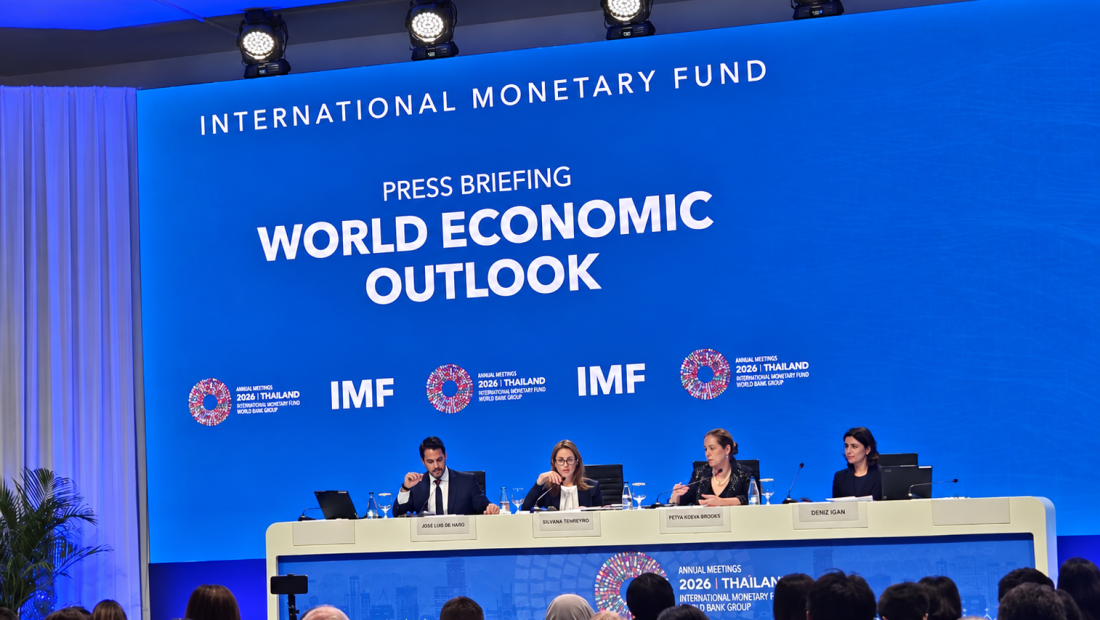
In its 2026 World Economic Outlook update, titled “Resilience Under Strain, Urgent Choices,” the Fund projected that global growth would improve to 3.4 per cent in 2027, while cautioning that persistent economic shocks could weaken investment, disrupt trade and increase pressure on businesses and households.
The assessment was presented by Silvana Tenreyro, Director of the IMF’s Research Department, during a briefing at the 2026 IMF–World Bank Annual Meetings in Bangkok, Thailand, on Tuesday.
According to the Fund, the global economy is being shaped by two competing forces: higher energy and commodity prices associated with the conflict in the Middle East, and increased investment and trade driven largely by the expansion of artificial intelligence (AI).
The IMF warned that prolonged disruptions to energy production and transportation could push up the prices of crude oil, natural gas, diesel and other essential commodities, increasing production and logistics costs across industries.
It also projected that global headline inflation would rise to 4.7 per cent in 2026 before easing to 4.1 per cent in 2027, highlighting the continuing challenge of maintaining price stability amid supply-side pressures.
For businesses, particularly small and medium-sized enterprises (SMEs), these developments could translate into higher operating expenses, tighter access to affordable financing and reduced consumer spending. Energy-intensive industries, manufacturers, transport operators and businesses dependent on imported inputs may face additional pressure on their margins and expansion plans.
The Fund further identified growing concentration in AI-related investment, technology supply chains and markets as a potential source of financial instability. It warned that a sharp correction in AI-related asset valuations or cybersecurity threats could undermine investment confidence and expose weaknesses in the global financial system.
While acknowledging that technology-driven investment is supporting economic activity, the IMF stressed the importance of managing emerging risks to ensure that innovation contributes to sustainable and broadly shared economic growth.
On fiscal policy, the Fund urged governments facing high debt levels and large budget deficits to exercise greater spending discipline and rebuild their capacity to respond to future economic shocks. It also recommended that assistance aimed at cushioning the effects of rising prices should be temporary and targeted at vulnerable households and businesses.
The IMF emphasised that central banks should remain focused on price stability, while governments strengthen supply chains, improve energy efficiency and adopt policies suited to their respective economic conditions.
The outlook also points to differences in countries’ growth prospects, depending on their exposure to commodity-price fluctuations, participation in AI-driven investment and access to affordable financing. Economies with limited access to capital and greater exposure to external shocks may face more difficult conditions.
For Nigeria and other developing economies, the global outlook reinforces the importance of strengthening domestic productive capacity, improving the business environment, diversifying sources of growth and expanding access to affordable finance. Supporting local manufacturers and SMEs, improving infrastructure and reducing avoidable production costs will be critical to building resilience against external economic shocks.
The IMF’s assessment underscores the need for governments and businesses to move beyond short-term responses to economic uncertainty by investing in productivity, strengthening supply chains and pursuing sustainable growth strategies.
Edited by
Rosemary Aiyenale