
Nigeria Needs Unified Crisis Communication to Strengthen Security, Build Public Trust.
ABUJA, October 28, 2026
Security experts and communication professionals have called for a coordinated national crisis communication strategy to support Nigeria’s security operations, strengthen public confidence and curb the spread of misinformation in an increasingly complex digital environment.
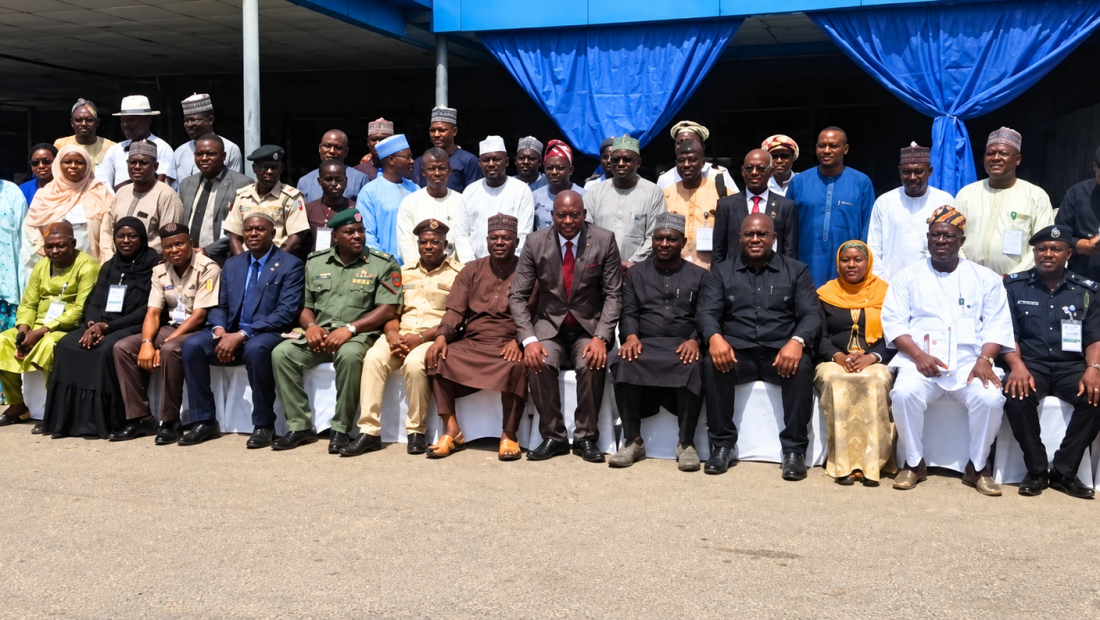
The call emerged from the Second National Symposium on Crisis Communication, organised by the Centre for Crisis Communication (CCC) in Kaduna, where participants emphasised that effective information management must complement operational measures in addressing the country’s security challenges.
With the symposium themed “Inter-agency Collaboration, Public Trust and Cyber Threat Management in Crisis Communication,” stakeholders examined how inconsistent official statements, delayed information and digitally manipulated content could undermine public confidence, heighten anxiety and complicate responses to security emergencies.
Chairman of the CCC, retired Major-General Chris Olukolade, described strategic communication as an indispensable element of national security, warning that false narratives could weaken public cooperation and undermine efforts to address security threats.
Retired Major-General Olukolade called for greater institutional preparedness, transparency and accountability, stressing that government agencies must work together to ensure the timely release of credible information. He also raised concerns about the use of artificial intelligence to generate fabricated videos, audio recordings and images, particularly in the lead-up to Nigeria’s 2027 general elections. He announced the unveiling of the Nigerian Journal of Crisis Communication to advance research and professional practice in the field.
Representing the Minister of Defence, retired Major-General Khalifa Ibrahim said Nigeria’s security concerns, ranging from insurgency in the North-East to kidnapping in the North-West and separatist agitations, required sustained collaboration among government institutions, security agencies and citizens.
Similarly, Brigadier-General Murtala Abu, who represented the Chief of Defence Staff, argued that cooperation among security agencies should extend beyond operational activities to the management of public information. He advocated harmonised official messaging, timely dissemination of verified information and the deployment of digital forensic tools, rapid fact-checking and artificial intelligence-assisted systems to identify manipulated content.
In a keynote address delivered on behalf of the Chief Executive Officer of Beacon Security Consulting, Dr Kabir Adamu, Samuel Arwan highlighted the influence of timely and credible information on public safety decisions and citizens’ willingness to cooperate with security agencies.
Arwan recommended clearly defined communication protocols establishing which institution should lead public communication during different types of emergencies. He also urged authorities to protect sensitive operational information without undermining citizens’ right to know, cautioning against ethnic profiling in efforts to address criminality.
Declaring the symposium open on behalf of Kaduna State Governor Uba Sani, the Commissioner for Information and Culture, Alhaji Ahmed Maiyaki, said public confidence and community participation were essential to achieving sustainable security.
He cited the Kaduna Peace Model, which incorporates dialogue, community engagement, intelligence sharing and early-warning mechanisms, as an example of the role inclusive approaches can play in preventing and managing conflict.
Alh. Maiyaki maintained that security operations alone could not guarantee lasting peace without credible communication and community cooperation. He further stressed the importance of promptly correcting inaccurate information to prevent communication gaps from creating room for speculation and rumours.
The stakeholders called on government institutions and security agencies to strengthen information-sharing mechanisms, establish clear communication responsibilities and improve their capacity to detect and respond to digital misinformation.
For Nigeria’s business community, the discussions also highlight the importance of reliable public information in sustaining confidence in institutions, supporting economic activities and reducing uncertainty during security emergencies. A coordinated approach to crisis communication could help businesses, investors and communities make better-informed decisions when disruptions occur.
The symposium concluded with a renewed emphasis on a whole-of-government and whole-of-society approach to national security, in which institutional coordination, responsible information management and public trust reinforce operational efforts to address insecurity.
Edited by Rosemary Aiyenale
Source: News Agency of Nigeria (NAN)