Fuel Subsidy Returns to Nigeria’s Political Debate as Cost-of-Living Crisis Persists
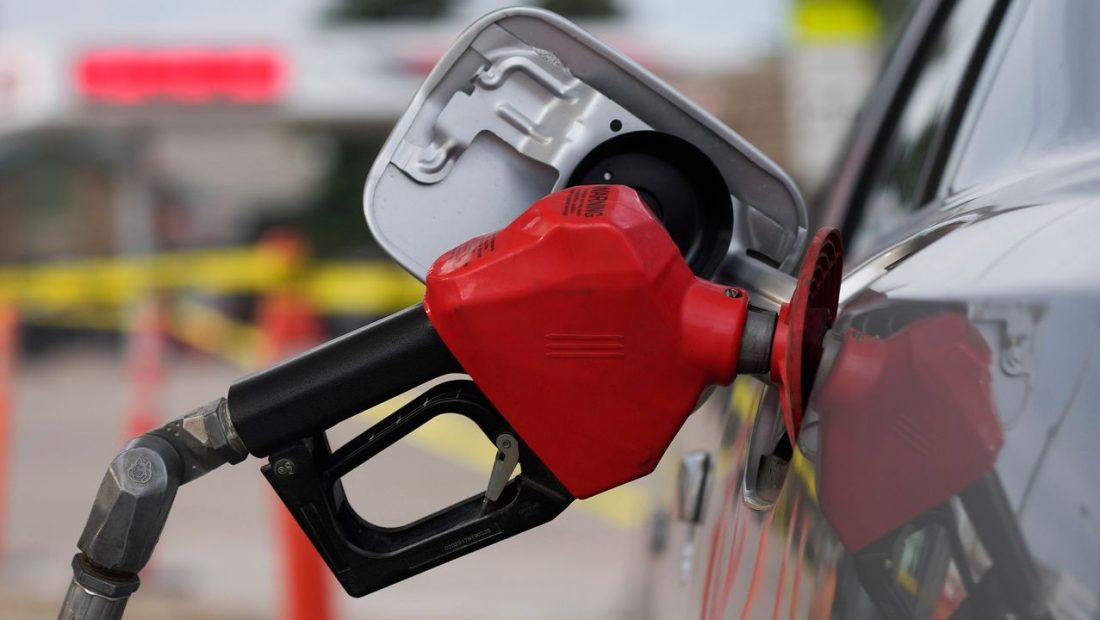
Nigeria’s long-running fuel subsidy debate is returning to the centre of the country’s economic and political conversation, as calls for cheaper petrol collide with concerns over the fiscal gains achieved since the subsidy was removed in 2023.
At the heart of the debate is a difficult question: should Nigeria prioritise cheaper petrol for immediate relief or protect the economic reforms that have helped strengthen government finances and key macroeconomic indicators?
Before the subsidy was removed in May 2023, petrol was sold at a heavily controlled price, with the Federal Government absorbing the difference between the regulated pump price and the cost of supplying the product. The arrangement placed a significant burden on public finances, with the subsidy estimated to have cost the government about ₦4 trillion in 2022 alone.
The system also failed to eliminate fuel scarcity. Nigerians frequently endured long queues at filling stations, while government resources that could have been directed towards infrastructure, healthcare and education were committed to keeping petrol prices artificially low.
Three years after the policy change, however, the economic picture has become more complicated.
Nigeria has recorded improvements in several macroeconomic indicators. Foreign exchange reserves rose to $52.73 billion by July 2026, crude oil production recovered to about 1.56 million barrels per day in June, while real GDP growth reached 3.89 percent year-on-year in the first quarter of 2026, compared with 2.74 percent for the whole of 2023.
Yet these improvements have not fully translated into relief for households.
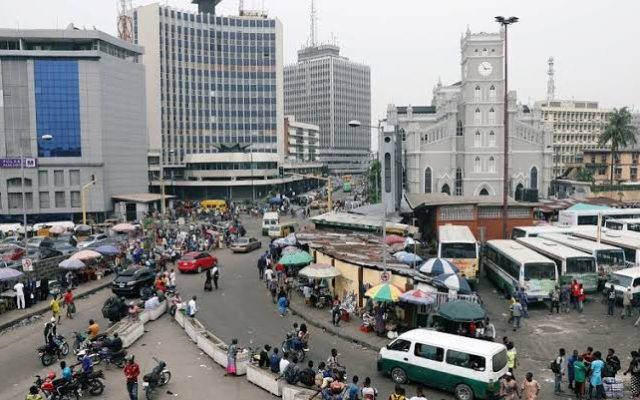
Many Nigerians continue to face high food and transportation costs, declining purchasing power and inadequate public services. The result is a growing disconnect between macroeconomic recovery and household economic reality.
The Price Nigerians Pay for Reform
The removal of the subsidy was intended to free government resources and correct distortions in the petroleum market. It has also changed the structure of Nigeria’s public finances.
According to Finance Minister Taiwo Oyedele, reforms generated approximately ₦15.8 trillion in additional resources for the federation between June 2023 and December 2025. Of this amount, the Federal Government received about ₦5.4 trillion, while states and local governments received approximately ₦10.4 trillion.
For government, these additional resources provide greater fiscal space.
For citizens, however, the benefit has been less obvious.
The removal of subsidy immediately increased the cost of petrol, with consequences extending beyond the filling station. Higher fuel costs affect transportation, logistics, agricultural distribution, manufacturing and virtually every business that depends on energy and mobility.
Consequently, cheaper petrol has become attractive to households looking for immediate relief from the cost-of-living crisis.
But economists and policy experts warn that bringing back a broad fuel subsidy could recreate many of the fiscal problems Nigeria has spent the last three years trying to address.
The Politics of Cheaper Petrol
The debate has gained additional significance ahead of the 2027 elections, with proposals emerging around the possibility of restoring cheaper petrol if there is a change in government.
Such proposals are politically attractive because fuel prices are directly connected to household welfare.
A reduction in petrol prices could immediately reduce transportation costs and provide relief to consumers. It could also lower some business operating costs.
However, the fundamental question remains: who will pay for the reduction?
Every naira used to subsidise petrol represents public money that cannot simultaneously be used for roads, electricity, healthcare, education, social protection or debt reduction.
If the subsidy is financed through borrowing, the cost is transferred to future budgets. If it is financed through monetary expansion or distortions in the foreign exchange market, the resulting pressure could eventually return through higher inflation or currency instability.
This is why the subsidy debate cannot be reduced to whether Nigerians want cheaper petrol.
Most Nigerians understandably want cheaper petrol.
The more important question is whether a broad subsidy is the most sustainable and effective way of improving living standards.
Cheaper Fuel Does Not Automatically Mean Cheaper Living
One of the strongest arguments against returning to the old subsidy model is that fuel represents only one component of Nigeria’s cost-of-living problem.
Transport prices are also determined by road conditions, vehicle availability, mass transit infrastructure and logistics efficiency.
Food prices are influenced by agricultural productivity, insecurity, storage facilities, electricity, transportation and distribution.
Household welfare depends on employment, wages and purchasing power.
This means that simply reducing the price of petrol may provide temporary relief without addressing the structural causes of high living costs.
A more targeted approach could direct government resources towards vulnerable households, public transportation, electricity, infrastructure and productive sectors.
Such an approach would seek to reduce the overall cost of living, rather than concentrating public resources on keeping one commodity artificially cheap.
Nigeria’s Refining Revolution Adds a New Dimension
The subsidy debate is also taking place against the backdrop of a changing domestic petroleum industry.
Nigeria now has significantly greater domestic refining capacity than it did when the subsidy regime was operating at its peak.
This creates an opportunity to develop a petroleum market that relies less on imported refined products and more on domestic production.
However, uncertainty around subsidies could affect investment decisions.
Investors who have committed significant capital to refining need clarity about how the market will operate and whether government interventions could alter the economics of their investments.
The policy challenge is therefore to protect consumers without creating an environment in which private investors cannot predict future market conditions.
The Bigger Question: What Happens to the Reform Gains?
The central issue facing Nigeria is not simply whether subsidy should return.
It is what the country does with the fiscal space created by subsidy removal.
If the government has gained additional resources from reform, Nigerians should be able to see those resources reflected in improved infrastructure and public services.
The additional revenue should support investments that reduce the structural cost of living: better roads, mass transit systems, reliable electricity, healthcare, education, security and productive infrastructure.
The same principle applies to the states and local governments that have benefited from increased Federation Account allocations.
If Nigerians are paying more for petrol, transportation and other essentials, governments must demonstrate that the resources released by reform are being converted into tangible improvements.
From Macroeconomic Stability to Household Prosperity
Nigeria appears to have made progress on several macroeconomic fronts, but stability alone is not enough.
A stronger reserve position, improved oil production and economic growth are important. But the ultimate measure of economic reform is whether ordinary Nigerians can earn more, spend less on basic necessities and enjoy better public services.
The World Bank has similarly highlighted the gap between improved macroeconomic stability and household welfare, underscoring the need for reforms to translate into stronger incomes and reduced poverty.
This is where Nigeria’s next phase of economic policy must concentrate.
The objective should be to create an economy where wages grow, businesses become more productive, transportation becomes more efficient, electricity becomes more reliable and food production becomes cheaper.
If those conditions improve, Nigerians will become less dependent on artificially cheap petrol as the primary measure of economic wellbeing.
The Road Ahead
The fuel subsidy debate is unlikely to disappear.
As the 2027 elections approach, cheaper petrol will remain an attractive political proposition, particularly for households still struggling with the consequences of economic reforms.
But Nigeria must learn from the weaknesses of its previous subsidy regime.
A return to the old system without a clear financing mechanism, transparency framework and exit strategy could recreate the fiscal pressures that contributed to the decision to remove it in the first place.
Rather than choosing between cheap petrol and economic reform, Nigeria needs to find a way to make economic reform deliver cheaper living and better livelihoods.
The challenge is to ensure that the benefits of macroeconomic stabilisation reach the household level.
For Nigerians, the question is no longer simply “How much is petrol?”
It is becoming:
“What is government doing with the resources freed by reform to make life more affordable?”
That may ultimately be the real test of Nigeria’s economic reforms.