
Nigeria’s Manufacturing Sector Remains Stuck Below 10% of GDP Despite Reforms
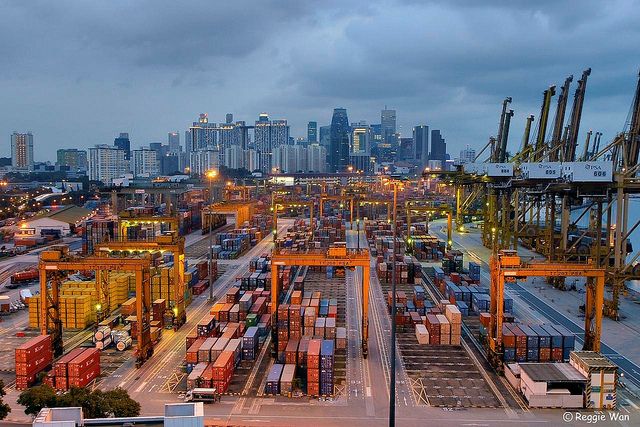
Nigeria’s manufacturing sector has continued to struggle to expand its contribution to the national economy, remaining below 10 percent of Gross Domestic Product (GDP) despite several government reforms and industrialisation initiatives over the past decade.
Data from the National Bureau of Statistics and the World Bank indicate that manufacturing accounted for 9.43 percent of GDP in 2015, but its contribution had fallen to 8.05 percent by 2025. The figures point to a decade of limited industrial expansion despite Nigeria’s growing population and consumer market.
ALSO READ: ₦47 Trillion and Counting: The Big Question Behind Nigeria’s Revenue Surge
The sector experienced some improvement during the period, reaching a peak contribution of about 9.65 percent in 2018. However, the gains were not sustained. Manufacturing contribution declined to 8.08 percent in 2020 amid the economic disruptions caused by the COVID-19 pandemic, recovered gradually to 9.27 percent in 2023, and then fell again to 8.66 percent in 2024 and 8.05 percent in 2025.
Structural Challenges Continue to Weigh on Industry
Industry stakeholders have attributed the weak performance to persistent structural challenges, including unreliable electricity supply, high interest rates, poor transport infrastructure, multiple taxation, foreign exchange volatility and heavy dependence on imported raw materials.
Low capacity utilisation and weak consumer purchasing power have also limited manufacturers’ ability to expand production and investment. The sector remains heavily concentrated in food, beverages and tobacco, leaving it vulnerable to supply-chain disruptions and fluctuations in input costs.
The removal of the petrol subsidy in 2023, although intended to create fiscal space for productive investment, also increased energy, transportation and operating costs for manufacturers, adding to the pressures facing businesses.
Economic analysts argue that these challenges have prevented manufacturing from becoming the transformative engine of diversification, employment creation and export growth that Nigeria has long envisioned.
Nigeria Trails Several African Peers
Nigeria’s manufacturing performance also compares unfavourably with several major African economies. World Bank data for 2024 showed manufacturing value added at approximately 8.65 percent of GDP in Nigeria, compared with 15.27 percent in Morocco, 13.89 percent in Egypt, 12.80 percent in South Africa and 9.84 percent in Ghana.
The gap highlights the difficulty Nigeria faces in converting its large domestic market and abundant resources into a competitive industrial base.
Analysts warn that continued dependence on imported manufactured goods exposes the economy to external shocks, exchange-rate pressures and disruptions in international supply chains.
New Industrial Policy Targets 20–25% by 2030
The Federal Government’s recently introduced National Industrial Policy (2025–2030) seeks to significantly change this trajectory by targeting an increase in manufacturing’s contribution to GDP to between 20 and 25 percent by 2030.
However, achieving this target will require more than policy announcements. Industry experts say government must address the fundamental constraints that have historically undermined manufacturing competitiveness.
Key priorities include improving electricity supply, expanding transport and rail infrastructure, providing affordable long-term financing, strengthening local content requirements, tackling smuggling and ensuring greater consistency in industrial policies.
There is also a need to strengthen development finance institutions and provide manufacturers with concessionary funding that supports long-term investment rather than short-term working capital.
The Way Forward
The persistent weakness of Nigeria’s manufacturing sector demonstrates that policy reforms alone cannot deliver industrial transformation without effective implementation.
For manufacturing to become a stronger contributor to GDP, government and the private sector will need to work together to reduce production costs, improve infrastructure, deepen access to finance and create a more predictable investment environment.
Nigeria’s ambition of becoming a leading manufacturing hub in Africa will ultimately depend on its ability to move from policy formulation to sustained implementation and measurable improvements in industrial productivity, competitiveness and value addition.